
 My Courses
 My Portfolio
 Refer & Earn
 My Purchases
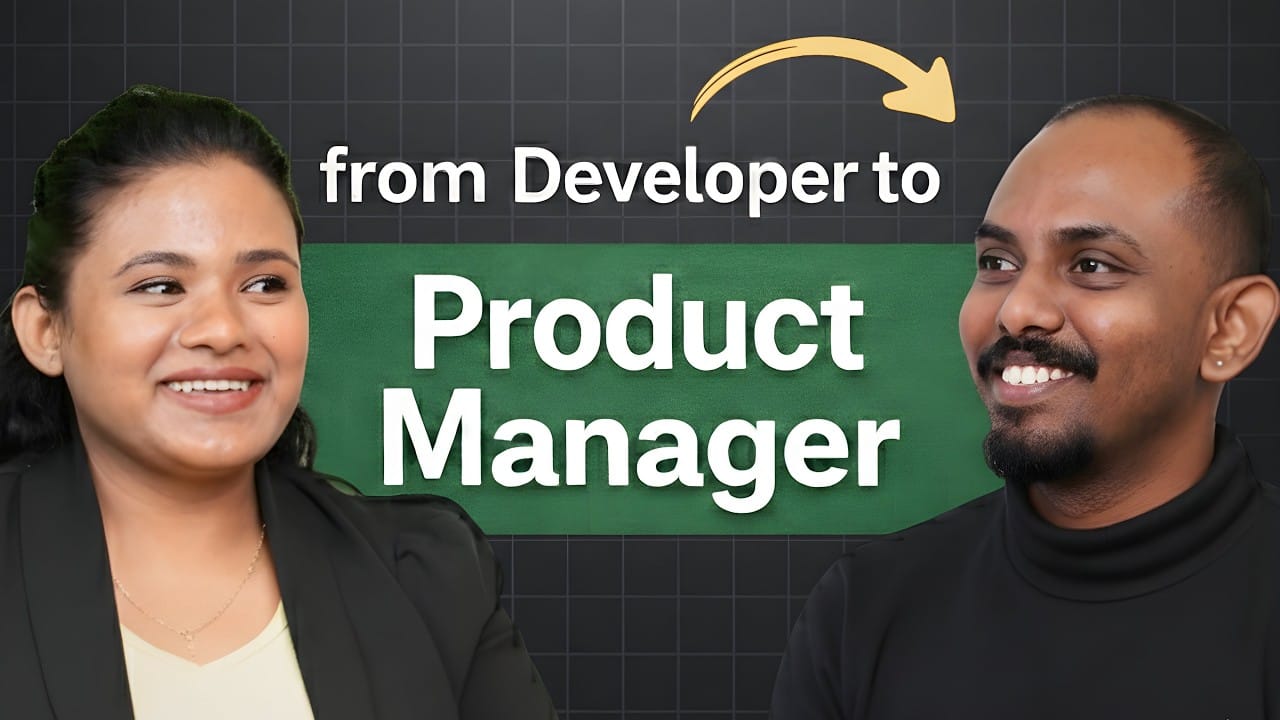
At a glance
- Before: Software developer who ran a startup and worked at three early-stage startups
- Now: Associate Product Manager
- Program: NextLeap Product Manager Fellowship, where he became a top fellow
- What made the difference: Proof of work, cold emails to founders and interview practice
- Biggest lesson: "If a product is for everyone, then the product is for no one."
"I believe that if you are solving real problems, the value comes back to you." That belief runs through Himanshu's journey from software developer to product manager. He skipped mass placements, tried a startup in Nagpur, built apps at three early-stage companies and then moved into product. He described the switch and his advice for developers on the NextLeap Alumni Podcast.
How did Himanshu go from software developer to product manager?
Naturally, and over several years. Himanshu says the switch began in 2018. He finished engineering, went back to his hometown Nagpur, prepared for GATE as a fallback and started looking for real problems to solve. Home-cooked meals for students living away from home was the first.
The idea grew into a food delivery app for hidden gems, the small stalls that serve very good food but have few customers. It did not work out. Along the way he learned lean startup, design thinking and UI/UX, talked to customers and picked up app development, which stuck. From 2021 to 2024 he worked with three early-stage startups. "It was not a sudden decision for me. It was like a natural transition that I always wanted to do."
What did three startups teach him?
Three separate lessons, one from each company. The domains were sports tech, fintech and proptech.
- Know the domain. It lets you make informed decisions and see why a feature is built the way it is.
- Have a clear product vision. At the second company, listening to many user feedbacks pulled the product in several directions and stalled growth. "I believe if a product is for everyone then the product is for no one." Finish the first vision before moving to the next.
- Build solid foundations. With good documentation and code, scaling becomes "a manageable chaos" instead of a nightmare.
What did he do during his career break?
He researched, and chose product over UX research. Himanshu was not sure product management existed as a career at first. Looking at his skills, two options felt natural: UX researcher and product manager. He picked product because he would get to take decisions that change business outcomes and affect user experience.
He then looked at cohorts that teach product management and messaged several NextLeap alumni on LinkedIn, who gave honest feedback. Affordability mattered because he was not working. He completed every milestone, attended the live sessions and learned from mentors who worked in product. The Product Manager Fellowship also has a graduation project, and he missed his first submission by a minute. He passed on the second attempt and became a top fellow.
How does a developer get a first PM job?
By combining volume and quality, and by building proof of work. Himanshu says not every developer wants to be a product manager, since the job means talking to marketing, customer-facing and other teams. If that appeals, he suggests four steps.
- Position your developer skills. He presented himself as a mobile app developer who understands engineering. If the design gets too ambitious, he can flag technical feasibility.
- Prepare for interviews. Cover product design, root cause analysis and guesstimates.
- Apply widely, and cold email founders. Applying on job portals is the volume approach. "The quality approach would be cold emailing founders. It has a lot more conversion than applying randomly." Researching the company first already helps you stand out.
- Build proof of work. Without experience, people need evidence. He made a portfolio, case studies, PRDs and a SQL case study, since he was applying for product owner, product analyst and product manager roles. One case study asked how quick commerce is affected when it rains heavily in Bangalore.
What does the job look like day to day?
Less clarity than a developer expects. Himanshu says as a developer you are told what to do. "As a product manager you have to really navigate the ambiguity," making trade-offs and taking decisions so that the product keeps moving. He also says the job comes down to communication: "On paper product looks like research and product strategy but in real it is a lot more communication," including removing blockers for everyone else.
Which skills does a new product manager need?
It depends on the product phase you join. Himanshu describes a product life cycle of introduction, growth, maturity and decline. Newcomers usually join in introduction or growth, because maturity calls for years of experience.
- Introduction phase: user research, surveys and interviews, user stories, user flows, competitive and market research to find gaps and size the market.
- Growth phase: prioritisation of which features to ship.
- Both: stakeholder management.
Today he adds a new one. Everybody can build a product with AI, so the skill is telling noise from signal: knowing why you are building something and why you take a decision.
How does AI help an associate product manager?
As an unpaid intern for the grunt work. Himanshu pushes tasks such as writing user stories down to AI, gives it the structure and reviews the output, freeing time for product thinking. It can help with PRDs too. But you cannot rely on it to take decisions, he says, because AI is not deterministic: it may not answer the same way twice. Experience and context from across the product still decide.
Himanshu's advice for developers in 2026
He gives five pointers for developers who want to move into product this year.
- Go beyond your immediate task and think about how your feature fits the product.
- Learn product frameworks such as RICE and MoSCoW, and understand why each trade-off was made.
- Build customer empathy by understanding how users use a feature and where it hurts.
- Develop business acumen: see how product strategy affects business strategy.
- Try an internal switch if you can. You already know the product, so it is easier and more likely to convert.
I believe if a product is for everyone, then the product is for no one.
Watch the full conversation
Himanshu shared his story on the NextLeap Podcast.
Start your own switch
Himanshu's switch combined a structured cohort, proof of work and direct outreach. If you are a developer thinking about product, the NextLeap Product Manager Fellowship offers mentors from the industry, projects for a portfolio and peers to practise interviews with.
Frequently asked questions
How does a software developer become a product manager?
Himanshu says to map the skills you learned as a developer and position yourself as someone who understands engineering. Then prepare for product design, root cause analysis and guesstimate rounds, build proof of work, and apply. He also recommends developing empathy and business acumen, and trying an internal switch where you already know the product.
How do you get a first PM job as a developer?
Himanshu combines two approaches. The volume approach is applying widely on job portals. The quality approach is researching companies and cold emailing founders, which he says converts better. Both need proof of work, such as a portfolio, case studies, PRDs and a SQL case study, because you have no product experience to show yet.
Is AI a threat to product managers?
Himanshu does not think so. He describes AI as an unpaid intern that takes over grunt work such as writing user stories, so he can spend time on product thinking. He warns against relying on it for decisions, since it is not deterministic. He says the key new skill is telling noise from signal.
What skills does a new product manager need?
Himanshu says it depends on the product phase. In the introduction phase, expect user research, user stories, user flows and market analysis. In the growth phase, prioritisation matters more. In both, you need stakeholder management and communication, and in the age of AI, the ability to tell noise from signal.


