My Courses
 My Portfolio
 Refer & Earn
 My Purchases

At a glance
- Before: Information science engineering graduate (2023) and technical intern, then an 8 to 9 month break
- Now: Associate Product Manager at Keka HR
- Program: NextLeap Product Manager Fellowship
- What made the difference: Structured learning, mock interviews with peers and one deep case study
- Biggest lesson: "Should I build this at all, and if yes, why?"
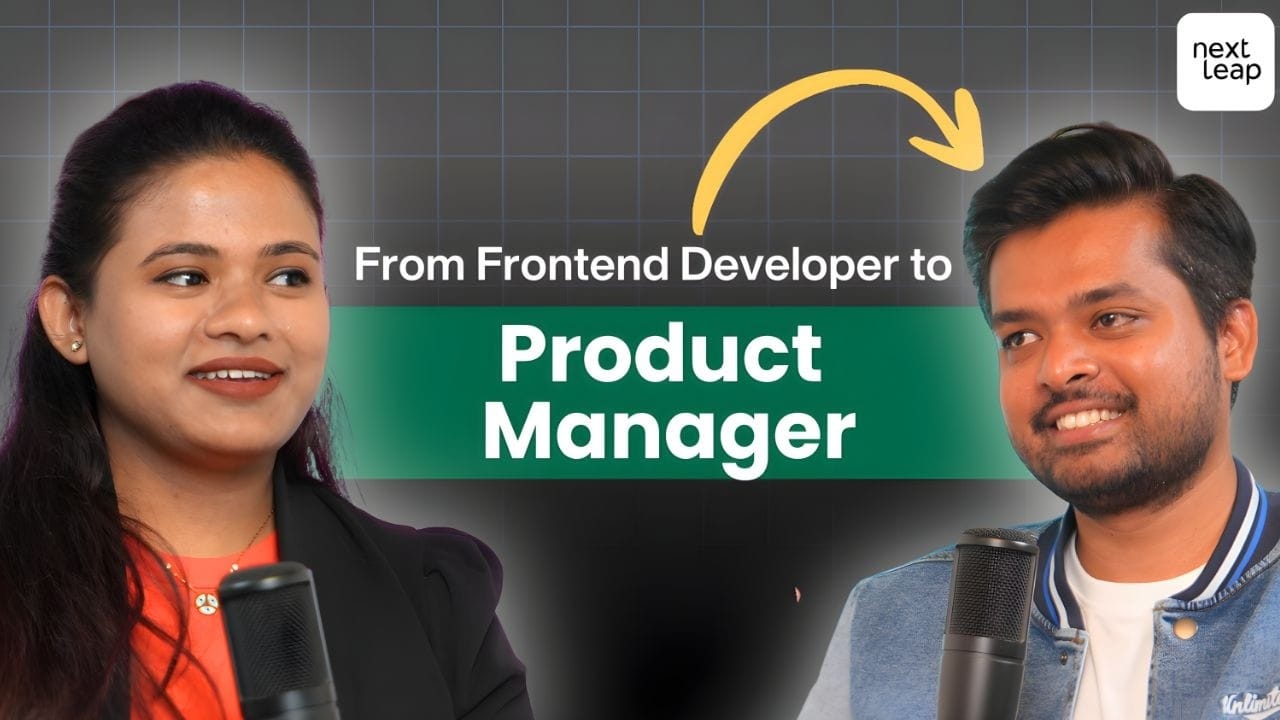
"As an engineer myself, when I transitioned into PM, the first problem that I faced was how to build something. Rather the mindset should be, should I build this at all, and if yes, why?" That mindset shift sits at the centre of Aashika's move from engineer to associate product manager. She got there after a career break, a LinkedIn post and the NextLeap Fellowship. She shared the details on the NextLeap Alumni Podcast.
How did Aashika go from engineer to associate product manager?
By using a career break to look for work she would actually like. Aashika says she was never fascinated by engineering, even while studying it. After finishing, she worked as a technical intern, learned a lot about the technical side and about herself, and realised it was not working out.
She took a break of 8 to 9 months to explore other options. One evening she saw a LinkedIn post where Arindam had commented, and that "really changed my whole career overnight." She looked up NextLeap and realised it was very close to what she wanted to do: solving real problems and creating impact. She just did not know it was called product management. The next day she asked the sales team for every detail, and she enrolled within a day.
The next three months were vigorous. After finishing the course she took up a few interviews and landed her job at Keka HR.
How do you get a PM resume shortlisted?
Fix three common mistakes, then reach out. Aashika made them herself.
- Use a clean, ATS-friendly format. Most organisations use applicant tracking systems, so your resume has to get through one.
- Drop jargon and fluff. Recruiters want to see impact. If you drove adoption by 30 percent, say so with the number, instead of pasting text that reads like a job description.
- Tailor it to the job description. Take keywords from each posting and use them in your resume before you apply.
She adds one step that helped her personally: reach out to the hiring team. Many platforms show the hiring manager's name. Message them, attach your resume again and say you have applied and are interested. She says it goes a long way.
Which PM interview rounds eliminate most freshers?
The case study and product design rounds. Both need you to understand the problem in depth. Aashika says junior candidates often make assumptions about the problem and start with solutions. "When you start jumping to solution directly you do not have depth."
Her fix is to avoid force-fitting frameworks. Ask clarifying questions, understand the problem, and segment your users. That shows the interviewer that you think in a structured way.
Which skills does a fresher need for product management?
Three, she says. Soft skills matter as much as hard ones.
- Curiosity and continuous learning. Freshers start with smaller features and grow from there. She also says to stay on top of AI trends.
- Communication. You deal with design, marketing, sales and engineering. Ideas are of little use if you cannot convey them to stakeholders.
- Problem solving and critical thinking. Try case studies, reverse engineer how apps work and sit with the problem. She says the solution then comes automatically.
What is the best way to learn product management in 2026?
Understand the field first, then take a course. Aashika suggests building foundational knowledge of what a product manager does and checking whether it matches your goals. She did this before joining NextLeap. Use AI to understand current trends, and reach out to people on LinkedIn to see what their roles look like.
Only then enrol in a course. Hundreds of YouTube videos can leave a fresher lost. She found the Product Manager Fellowship extremely structured, going chapter by chapter and module by module, in the same flow a PM would think in a company. It was easy for a fresher to consume and did not feel overwhelming.
What should a product management portfolio include?
One deeply thought case study, at least. Recruiters do not need a variety of projects. They want to know whether you thought through the problem in depth. Aashika's end-to-end structure runs from problem definition to user and market research, competitive analysis, solutioning, prioritisation and frameworks, and finally risks, mitigations and metrics.
Extras that help are product teardowns, PRDs, no-code prototypes and wireframes. They show you can write requirements and turn ideas into designs.
What case study mistakes should candidates avoid?
Three, in her experience. First, not asking clarifying questions before solutioning, even when you think you understand the problem. Second, force-fitting frameworks where they do not apply. Simply state the structure you are following. Third, forgetting the business impact. Tie your idea to metrics and end by saying why it may work and what could make it fail.
The rounds she describes for freshers are an HR round, a take-home case study with a follow-up, and product design, product improvement, root cause analysis and guesstimates.
How should you prepare when you do not feel ready?
Begin anyway. "What happens commonly with freshers is that we confuse exposure with readiness." She says you might not be 100 percent ready, and that 100 percent never comes.
- Prepare your own PM story: why PM, why the move from engineering and your favourite product.
- Create a personal framework for each core case type and keep it on a sheet of paper.
- Practise with peers or mentors. After each mock, note where you fumbled and fix it next time.
- Show up even if you are not fully ready, because you will take away some learning.
She also spent a lot of effort on SQL and system design, but none of her earlier interviews asked about them. She adds that AI and tech PM roles may change that, so surface-level knowledge helps.
Is AI a threat to product managers?
Not in her view. Aashika uses AI at work for basic things such as writing PRDs and cross-checking her work, and she says it saves time. She also suggests building AI prototypes if you have ideas you cannot put on paper. Use AI as a helping guide, not as a threat.
Show up for the interview even if you're not 100% ready.
Watch the full conversation
Aashika shared her story on the NextLeap Podcast.
Start your own switch
Aashika's switch came from a structured course, peer mock interviews and one well-built case study. If you are an engineer considering the same move, the NextLeap Product Manager Fellowship offers projects, mentors and a cohort to practise with.
Frequently asked questions
How do you get a PM resume shortlisted?
Aashika says to use a clean, ATS-friendly format, replace jargon with measurable impact such as a 30 percent adoption gain, and tailor the resume to each job description using its keywords. She also suggests messaging the hiring manager directly after applying, attaching your resume again and saying you are interested in the role.
Which PM interview rounds eliminate most freshers?
According to Aashika, the case study and product design rounds. Junior candidates often assume the problem and jump to solutions, which signals a lack of depth. She advises asking clarifying questions, segmenting users, and avoiding force-fitted frameworks. Tie the answer to business impact, metrics and risks by the end.
What should a product management portfolio include?
Aashika recommends at least one case study that is thought through end to end: problem definition, user and market research, competitive analysis, solutioning, prioritisation, risks and metrics. Add product teardowns, PRDs and no-code prototypes or wireframes. Recruiters look for depth of thinking more than a wide range of projects.
Is AI a threat to product managers?
Aashika does not think so. She uses AI to write PRDs and cross-check work, and to build prototypes of ideas. She calls it a helping guide, not a threat, and says product managers should learn it and stay current with AI trends. Judgement about what to build and why remains the manager's job.