My Courses
 My Portfolio
 Refer & Earn
 My Purchases

At a glance
- Before: Engineering graduate (2022)
- Now: Associate Product Manager
- Program: NextLeap Product Manager Fellowship, where she became a top fellow
- What made the difference: Weekend sessions, a mentor, a community and a portfolio ready to share
- Biggest lesson: "You don't have to wait till you get everything right and then start."
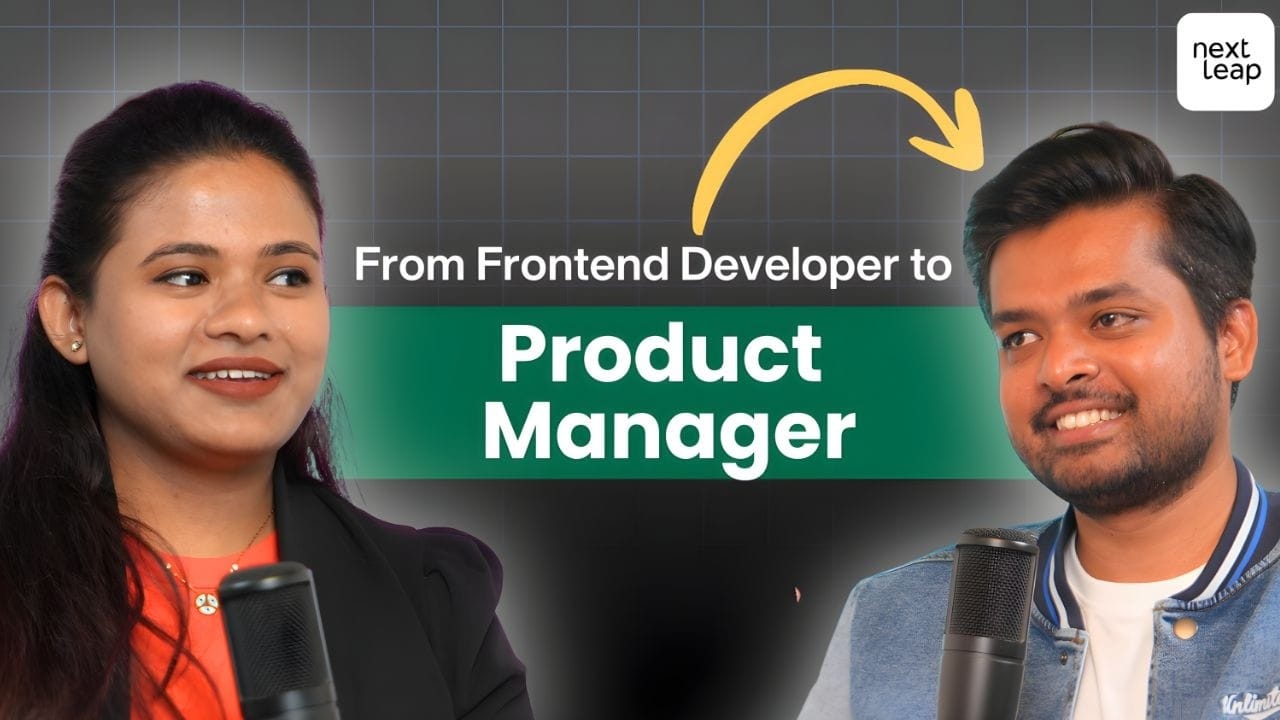
Amrutha had an offer from a large company and was waiting for it to start when a friend asked why she did not try product management. Her path from engineering fresher to product manager began during that stressful gap. She had always thought the role was for people with years of experience. She explained how she changed her mind on the NextLeap Alumni Podcast.
How did Amrutha go from engineering fresher to product manager?
During a long wait after graduation. Amrutha finished engineering in 2022. She says she was not really into coding, so she explored other careers, and during her engineering she had done a social media managing internship. After her degree she had an offer from a multinational, but the onboarding had not started.
It was right after Covid and things were still settling down. She was frustrated, staying at home without any direction, and at some point she did not know whether the onboarding would ever happen. Then a friend suggested NextLeap. "I always thought it was more like a senior role," she says, something you start after a few years of experience.
Why did she pick a three-month program?
Because three months felt like a reasonable time to test the field. Amrutha was worried that starting product with no prior experience was risky, since product is a very competitive field. But the program was for three months, and she was still waiting for her onboarding. She decided three months was enough to work out whether she liked it, so she took a shot.
She says the decision changed her career completely, even though she did not realise how much at the time. The gap also worked in her favour. She finally had a structure, and she had the time to give to the fellowship.
What did the fellowship cover?
Almost everything she needed as a foundation. Amrutha lists the weekend sessions, the learning material, user research, problem statements and system design, plus many small things that completed the structure. The Product Manager Fellowship also gave her a mentor she could reach out to at any time, who was very accessible and approachable.
She adds that the community mattered too. Everyone was in the same journey, everyone wanted to get into product, and everyone was confused about the ambiguity and vagueness that product management brings. Towards the end, after the graduation project, fellows also practise peer-to-peer interviews. "I really needed that foundation to break into product."
How did she become a top fellow?
On a second attempt, with help from peers. There were two graduation projects during her fellowship. She started the first one a little late and could not complete it. She decided to try again with the next month's project, and this time she was slightly more prepared and had friends in the community. They helped each other finish. Becoming a top fellow felt like an achievement, she says, and it made her more confident that she could start applying for jobs and internships.
How did a ready portfolio help her get a first internship?
It saved her time. Amrutha says the fellowship sets up a whole portfolio, so all she had to do was paste the link and improve it. She did not need to spend time creating her own website. She made sure her graduation project was on it, updated the case study she had worked on during the fellowship with edits, and added her previous experience.
She started applying, and about two months later she got her first product internship.
What does a product manager actually do?
More than most people expect, and half of it is not building. Amrutha's advice is to understand the role before breaking in. "It's not just the whole cool job thing." She says about 50 percent of the job is building new features and curating the user experience. An equal amount goes into people management: talking to different stakeholders, aligning them and getting a shared understanding.
That is not easy, she says. You cannot just tell people something and expect them to align. She thinks many people do not realise this, and even during the course you learn about the nature of the work but may not know that this is also part of it. She would want aspirants to know it beforehand.
How do you deal with ambiguity as a product manager?
Do not try to get everything right before you start. After a year as an associate product manager, Amrutha says the one thing she would tell her earlier self is not to stress about getting things right. Product management is very vague, and there is a lot of ambiguity. Trying to understand everything in detail and get every use case in place can overwhelm you and slow you down.
"You don't have to wait till you get everything right and then start." Learning some frameworks helps because it gives you structure. Her advice is to start doing things and figure them out on the way.
How is AI helping product managers?
By saving time and turning ideas into prototypes. Amrutha calls AI a great tool, and says there are many prototyping tools now. She does not see it as a threat to product design or product management jobs. It is a helpful tool you need every day, she says. She uses ChatGPT regularly, and builds her prototypes in a design tool that lets her go from idea to a full prototype.
Is product management only for senior people?
No, and Amrutha says that is a belief many share. The word manager makes it sound like a role for someone with five, six or even ten years of experience. But now it has become accessible to everyone, she says. You can read about it, do courses and get into your dream role. That was exactly her own path: she did her engineering, took a break, did the fellowship and got into product.
You don't have to wait till you get everything right and then start.
Watch the full conversation
Amrutha shared her story on the NextLeap Podcast.
Start your own switch
Amrutha's switch came from a structured program, a mentor, a community and a portfolio that was ready to share. If you are a fresher who wants to test product management, the NextLeap Product Manager Fellowship is a three-month way to find out whether you like it.
Frequently asked questions
Can an engineering fresher become a product manager?
Yes. Amrutha completed engineering in 2022, was not interested in coding, and used a gap while waiting for a job onboarding to join a three-month fellowship. She became a top fellow, built a portfolio and got her first product internship about two months after applying. She says product management has become accessible to everyone.
What does a product manager do day to day?
Amrutha says about half the job is building new features and curating the user experience. An equal amount is people management: talking to different stakeholders, aligning them and getting a shared understanding. She says aligning people is not as easy as telling them something, and that many aspirants do not realise this before they start.
How do you deal with ambiguity as a product manager?
Amrutha says product management is very vague, and trying to get every detail and use case right before you start can overwhelm and slow you down. She advises learning some frameworks for structure, then starting and figuring things out along the way, instead of waiting until everything is right.
Is AI a threat to product managers?
Amrutha does not think so. She calls AI a great tool that saves time and helps turn ideas into full prototypes. She does not consider it a threat to product design or product management jobs, and says it is a helpful tool you would need every day. She uses ChatGPT regularly and builds prototypes with a design tool.