My Courses
 My Portfolio
 Refer & Earn
 My Purchases
At a glance
- Before: Growth operations at a fintech, after a college product event and an internship
- Now: Product Manager at IRCTC
- Program: NextLeap Product Manager Fellowship
- What made the difference: Structured study, live classes and knowing what she wanted
- Biggest lesson: "It's very okay to not know what you want."
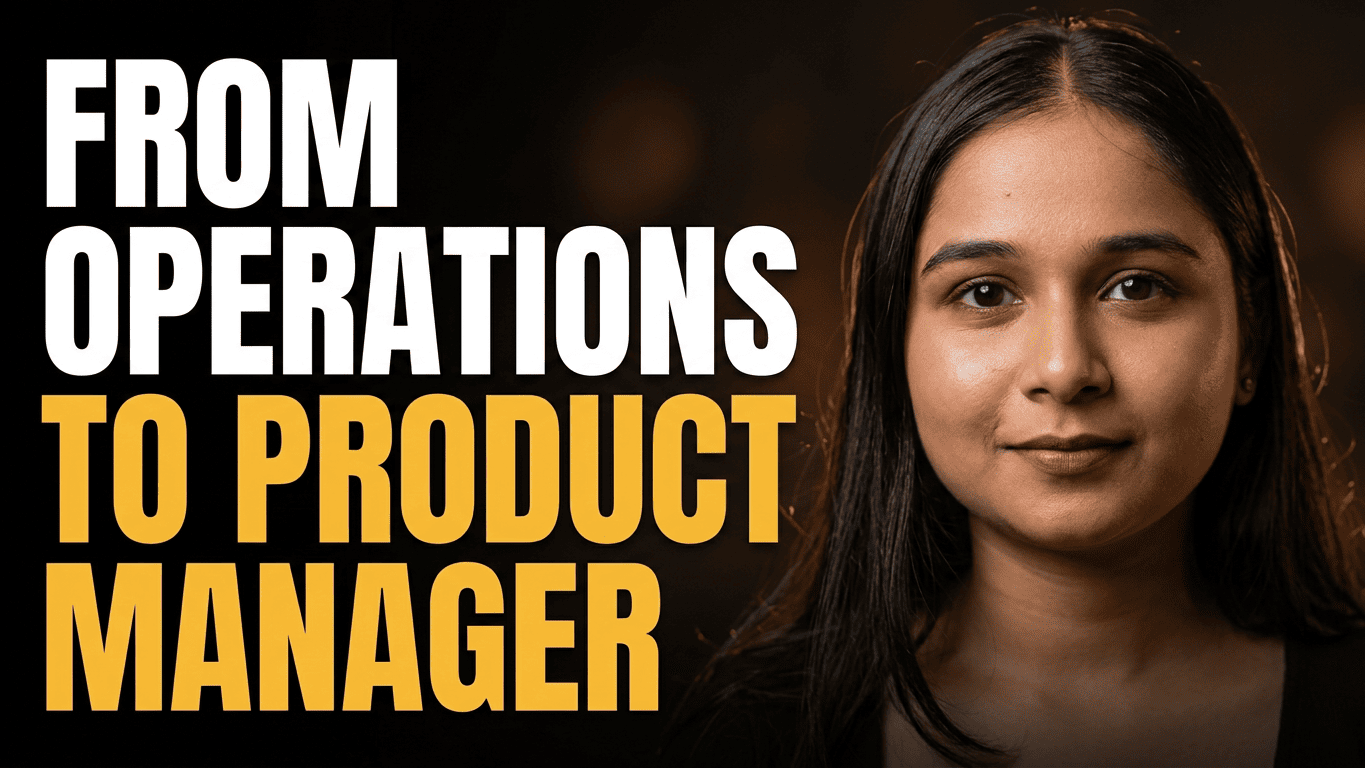
Rashi Goswami's route from operations to product manager was, in her words, "slightly accidental." She has been a content creator, a chess player, a musician and a traveller, and she moved through a growth operations role before landing in product. On the NextLeap Alumni Podcast she explained how a college event planted the idea, why she chose a structured course, and how she keeps her creative side alive while doing a demanding job.
How did Rashi go from operations to product manager?
By a mix of accident and eventual clarity. Rashi says that during college she was supposed to be in a classroom, but an event was running at her college's entrepreneurship cell called Product Over Weekend. She thought it was a good reason to skip class, so she went.
The first round of shortlisting asked for a product idea. Every college student has some business idea in their head, she says, so she gave one, and it was shortlisted. For the next three to four days the participants worked from morning till night in an incubation centre with about fifty people, each on a different idea. You supported someone else's idea, contributed what you could, and they did the same for yours. Each product had mentors. On the fourth day they presented to the CEO of a company whose name she does not remember, and her idea was among the top five.
Why did she leave product and then come back?
Because she lost touch with it, and then found her way back. After college, Rashi says, she lost touch with product altogether. She was interning at a company similar to Myntra, in a product role, and was offered a full-time position, but it was remote. She wanted to meet people and get out of that zone, so she gave the role up and joined a fintech in growth operations.
Sometimes she thinks she should not have, she says, because she ended up in a product role anyway. But that is how she was introduced to product management as such. She worked almost two years in a non-product role. Because the company was a startup, she had to juggle different roles. About six months before quitting, she was working with the product team, and realised this was what she wanted. She notes that every role contributes to product in some way.
What is the common thread across her interests?
People. Asked what her content, chess, music and travel have in common, Rashi says that if she had to club everything together, it is more about people. She says it shows up everywhere, whether in a musician, in the people you meet while travelling, or the people you work with. You come to understand emotions and how people think, because everyone is a human.
That matters in product, she says, because any product is only useful if people can use it. A product manager has to understand what is common between a set of users and where they differ. Ten people may do the same thing, but one percent of each person will be different, so product managers bucket their users, and even simple buckets have minute differences inside. Talking to people gives you a different perspective on their stories and how you can improve.
How does she balance creative pursuits with a product role?
By treating balance as important and creativity as part of the job. Rashi says you cannot focus only on product, product, product, or content, content, content. Even if you do something you love, you still need an escape, to step back and see it from a distance. If you are fully occupied in one thing, she feels you tend to lose creativity in it.
She gives an example. If she worked day and night for a company and was not living her life, she would not give her hundred percent. If she finds time for herself and keeps herself calm and happy, those emotions eventually show up in her work. Her view is that you need at least two to three things to do besides the one that earns your bread. Money is important, she says with a laugh, but you also need something to live for.
Creativity matters for the role too. There are many products in the world that look similar, such as two food delivery products doing the same thing, yet each has its own uniqueness and relates to its user base differently.
Her personal rule is one hour a day for herself. She says she needs at least an hour of "me time" in her calendar on a regular day, not weekends, when she does not have to talk to anyone. As a product manager she talks to stakeholders, engineers and marketing all day, and she loves talking, but that hour helps her recharge.
Why did she choose a structured course?
Because the internet has too much and too little structure. When Rashi decided she wanted to get into product, she went to Google and YouTube, and found so much content that it confuses people. As a fresher who knew very little about product management, she felt a structured way of learning was very important, or you may miss something.
She shortlisted many courses and ended up choosing NextLeap for two or three reasons. The study material is very structured, so she knew what to do and when. She was already working and short on time, and did not want to spend mental energy deciding what to read. She joined the Product Manager Fellowship and spent three months on it.
What were the live classes like?
Gripping. Rashi says the sessions were so engaging that you cannot even think of missing a class, and she missed only one or two, at the very end. Early on, she says, she would think "I never thought from this angle," and the sessions pushed her to think from different angles.
She tells a story about one weekend when she was exhausted and slept for ten minutes between two classes. When she woke, the class was already going on, and even ten minutes of missing meant missing the context, because everything is connected. She says you can always ask questions or ask for a summary of the last ten minutes. She adds that live classes are subjective: some people want online classes and some want a classroom, but for people who are working, a balance is good, especially in Bangalore, where commuting is a task.
What advice does she give people with a scattered career?
Try things. Asked what she would tell people who think their career is too scattered, Rashi says:
It's very okay to not know what you want.
You will not know, she says, until you try. She says you have to try ten things to know what you want. If you stick to only one thing, you have not tried anything else, and you may find the third thing works but never gave it a chance. You can always come back to the first thing and see that nine others are not working for you. Her closing point is that it is okay to try and fail, because you will always learn.
Watch the full conversation
Rashi Goswami shared her story on the NextLeap Podcast.
Start your own switch
Rashi's switch came from trying things, then choosing a structure once she knew what she wanted. If you are coming from operations or another non-product role, the NextLeap Product Manager Fellowship offers structured learning, live classes and a cohort to practise with.
Frequently asked questions
Can someone in operations become a product manager?
Yes. Rashi Goswami worked almost two years in a growth operations role at a startup, and spent about six months working with the product team before she realised product was what she wanted. She says every role contributes to product in some way, and that knowing what you want makes it easier to find the right path.
How did Rashi Goswami first get into product?
Slightly by accident. She attended a college event called Product Over Weekend to skip a class, gave a product idea that was shortlisted, and spent three to four days working on it with mentors. Her idea was among the top five in the final presentation. She lost touch with product afterwards and returned to it later.
Why does a product manager need structured learning?
Rashi says there are so many courses, videos and content online that freshers get confused and may miss things. She chose a structured course because the study material told her what to do and when, which mattered because she was already working and short on time. She also found live classes made her think from different angles.
How does a product manager balance creative interests with work?
Rashi says she needs an hour of "me time" on a regular day, when she does not have to talk to anyone, because a product manager talks to stakeholders and engineers all day. She believes you need two to three things beyond the work that pays you, and that happiness eventually shows up in your work.