
 My Courses
 My Portfolio
 Refer & Earn
 My Purchases
At a glance
- Before: ETL developer for over three years
- Now: Associate Product Manager at Capillary Technologies
- Program: NextLeap Product Manager Fellowship, top fellow result on her first attempt
- What made the difference: Weekly revision, mentor feedback, peer interviews and not giving up
- Biggest lesson: "You need one golden interview."
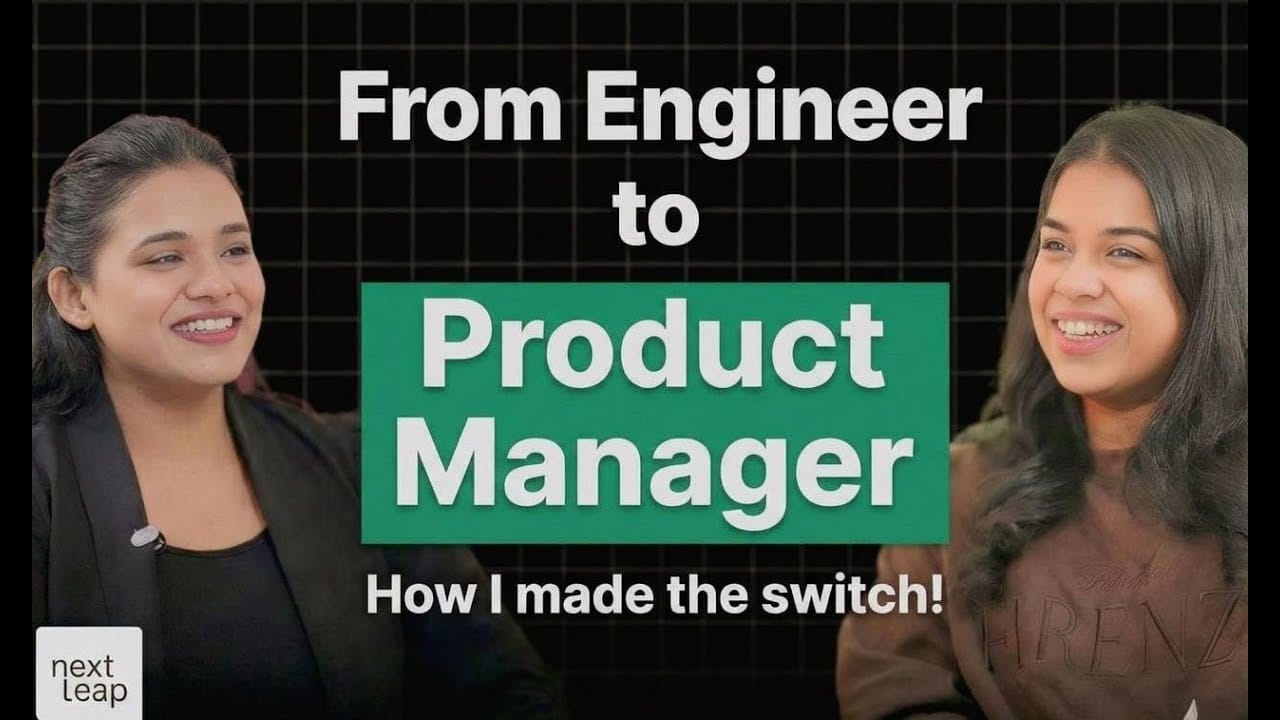
Christy's ETL developer to product manager story begins with a feeling that something was missing. She built workflows and solved problems for over three years, but was never part of the conversation about why. She is now an associate product manager at Capillary Technologies. On the NextLeap Podcast she described a run of rejections, an interview she almost skipped, and why she calls the whole journey a miracle.
Why did Christy move from ETL developer to product manager?
Because she wanted to talk to people and understand users. Christy has a computer science background, and even in her pre-final year she wanted to stay in tech but never saw herself doing coding in the long term. Her first job as an ETL developer was exciting at first. She developed things, solved problems, built workflows and learned how systems work behind the scenes.
Over time she realised something was missing. When she reflected, she found she was not talking to people, not understanding users and not part of the conversation that shapes the why behind the work. The work became, in her words, keep your head down and keep going: very repetitive, and not growing the way she wanted. She began exploring roles that blend technical knowledge with human interaction and bigger problem solving, and that is where she found product.
How is product management different from ETL development?
Not completely opposite, she says. Christy had already done some product-like tasks as an ETL developer. She dealt with clients indirectly, worked with leadership and across teams, solved problems and prioritised. Those are core product skills.
What was missing was creativity and the why. She says she was building things for the sake of doing it, without knowing why. Her advice to other ETL developers is that you already have the foundations: stakeholder management, problem solving and prioritisation. That is a very good place to start, and then you build on top of it.
What was the NextLeap fellowship like?
Exciting and exhausting in equal measure. Christy joined the Product Manager Fellowship for three months. She says none of it was theoretical. The sessions used products people use every day, such as Zomato, Instagram and WhatsApp, and she began to see them in a new light. Now when WhatsApp or Instagram ships an update, she asks what the product thinking was behind the change.
She also says it taught her to unlearn how everyone is conditioned in school: given a question, arrive at the solution. Instead she learned to ask why, dig deeper and get obsessed with first principles. She thanks Arindam for changing how she sees problems in her current job.
It was tiring too. She said no to weekend plans because of classes, including sessions after lunch when she was sleepy, and gave up plans with friends. Even without classes she revisited lectures, completed assignments and worked 21 days continuously on the graduation project. She says it was worth it.
How did she become a top fellow?
By being consistent through the week as well as the weekend. Christy says she had to revise on weekdays what she learned on weekends, complete every milestone assignment and get real-time feedback from her mentors. Those milestones were stepping stones for the graduation project, and the feedback gave her direction and structure.
She made a rule not to miss any live session, however tired she was, even if she attended only for an hour or two and felt behind. There were three attempts available, and she expected to clear it on the second or third. She made the top fellow list on her first attempt and calls seeing her name there a surreal moment.
How did she land her first product manager role?
After a long season of rejection. She warns that it would not be fair to jump straight to the role: "There was a very long season of rejection and struggle before I actually got my first role."
She first cleared the hiring manager round, which fellows must clear to be eligible for job placements, on her first attempt. She also gave many peer-to-peer interviews after office hours. That helped her structure answers, stay within time and communicate her thought process, which she calls the tough part of an interview.
Her first product interview ran an hour and twenty-five minutes, and she thought she had nailed it. The next day she learned the feedback was not positive. A week later she was rejected again, and then again a week after that, all by good companies. Her morale hit an all-time low. But something in her said she could not go back to ETL after learning so much in three months, so she kept going.
What happened at Capillary Technologies?
The interview she nearly skipped. When Capillary reached out, after so many rejections, Christy thought about not showing up. Then a little voice said she had nothing to lose, and she went. Her only prayer was for one interview that felt like a conversation between two people deciding whether they want to work together, not an interrogation.
The first round was with the director of product, whom she calls the sweetest and kindest. She had expected the usual product design and RCA questions. Instead he asked what she had done in three years and how it translated to an APM role, and posed real-life scenarios, such as how she would explain something to an engineer or solution architect. She says he was checking her willingness to learn and take ownership, not only the right answer. The second round, with the director of customer success, covered behavioural questions.
The process was shorter than she had heard, with two rounds instead of three or four, and she was later told that other applicants were put on hold once she cleared the first round. Five months into the job she says she loves the team and would not trade it.
What does she tell people in tech who want to move into product?
Show up. Christy says everyone who has been in tech longer than a year or two has done product-like tasks: solved problems, understood user impact, prioritised and talked to multiple teams. That is what product management is at its core, no matter how much AI enters the picture. Moving from tech to product means building on top of it.
She says engineers value product managers who understand tech, because they can troubleshoot without depending on others, and she thinks tech people have an advantage. She adds: "I have a BTech degree from a tier three college. I do not have an MBA." Her message is that if she could make it, anyone in tech can. Then:
You do not need 10 interviews. You need one golden interview.
How does she think about rejection?
As redirection. Christy says she was rejected in 2024 by big-name companies and wondered why, but had she been accepted she would probably still be an ETL developer somewhere else, doing something she did not like. She now sees each rejection as her version of a mock interview.
She also says she learned the hard way not to compare her journey with anyone else's. One person may clear the top fellow project in January and become an APM in February, and another may take twelve months. Celebrate the people who make it, she says, and ask what went well in their interviews, because "we are in the same team."
Watch the full conversation
Christy shared her story on the NextLeap Podcast.
Start your own switch
Christy's switch came from weekly revision, mentor feedback, peer interviews and refusing to quit. If you are a developer or engineer who wants to be part of the why, the NextLeap Product Manager Fellowship offers structure, mentors and mock interviews to practise with.
Frequently asked questions
Can an ETL developer become a product manager?
Yes. Christy worked as an ETL developer for over three years and is now an associate product manager at Capillary Technologies. She says ETL developers already have stakeholder management, problem solving and prioritisation skills, so the path is to build product thinking on top of them, especially asking why the work is being done.
How does a tech background help in product management?
According to Christy, anyone in tech for more than a year or two has done product-like tasks such as solving problems, understanding user impact and prioritising. She also says engineers value product managers who know tech, because those managers can troubleshoot without depending on others. She believes tech people should not undermine themselves.
How did Christy handle repeated interview rejections?
She was rejected by good companies three times in a row after her first product interview, and her morale hit an all-time low. She kept going because she felt she could not go back to ETL. She now treats each rejection as redirection and as a mock interview, and advises against comparing your timeline to anyone else's.
How did Christy prepare for product manager interviews?
She cleared the hiring manager round on her first attempt and gave many peer-to-peer interviews after office hours. That helped her structure answers, stay within time and explain her thought process. She also attended every live fellowship session, completed each milestone with mentor feedback and revised on weekdays what she learned on weekends.


