My Courses
 My Portfolio
 Refer & Earn
 My Purchases
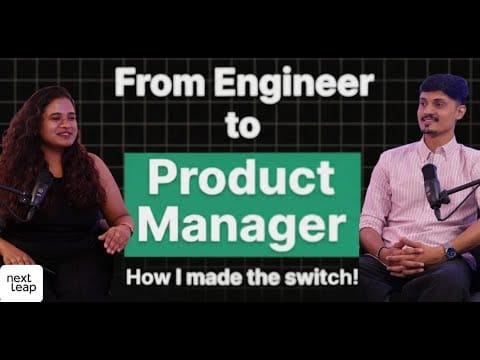
Data Engineer at Paytm to Product Manager: Preet's Story
Preet spent almost two years as a data engineer at Paytm, but wanted more impact. He explains the mindset change that was hardest, the peers who kept him practising, and how a hiring partner led to his first product manager role.
At a glance
- Before: Data engineer at Paytm for almost two years
- Now: Product manager at a retail company
- Program: NextLeap Product Manager Fellowship
- What made the difference: Structured case studies, a peer practice group and cold outreach
- Biggest lesson: Ask why before you build
Preet's data engineer to product manager switch began with a gap between activity and impact. After almost two years as a data engineer at Paytm, his tasks were clearly defined, but he wanted to sit at the intersection of business, users and developers. He is now a product manager at a retail company. On the NextLeap Alumni Podcast he explained the mindset change that was hardest, the peers who kept him practising, and how cold emails and a hiring partner led to his first role.
Why did Preet move from data engineer to product manager?
Because he wanted more impact. As a data engineer at Paytm, Preet says he had clearly defined tasks and, as most developers would agree, not much uncertainty or ambiguity to navigate. You are given a set of tasks to finish in a set time.
What lagged was the impact. He says he always wanted to be at the intersection of business, users, developers, marketing and other teams, and to drive those decisions rather than only reach solutions, "which is what most of the technical developers do." That was the main trigger for the switch.
Asked whether a data engineer or a product manager feels more like him, he answered without hesitation: product manager. He describes the transition itself as overwhelming, and says no two days are the same, even now.
What was the hardest mindset change for a developer?
Not jumping straight to solutions. Preet says developers and engineers can quickly jump to a conclusion because they are technically sound, and he was the same. When a problem came, they were quick to reach for a solution without thinking about other things.
He had to control that. Instead, he learned to assess the situation first. In an early-stage startup, for example, there can be budget constraints and resource constraints. The job then becomes finding the optimal solution for now within those limits. He calls this the biggest mindset change he had to make.
Which engineering skill helps most in product?
Understanding systems. Preet says that for technical product management, an underrated skill is knowing how systems work, how they are designed and why they are designed in a certain way. In his previous company he tried to understand how things were built and why.
That pays off in the room with developers. You can have a meaningful conversation about the optimal solution, he says, rather than a developer overwhelming you with the one they insist you go with. His advice for people from a technical background is to gather the technical knowledge as soon as you can and as much as you can.
How did the NextLeap fellowship help him?
With structure and with people. Before joining, Preet had tried to switch internally and had pursued an MBA, which he quit after some time. Friends who had done the fellowship told him to try it. He already had a basic idea of how product management works, but the Product Manager Fellowship gave him structured learning.
He values the case studies in the weekly sessions. They were based on real-life scenarios, brought by people from companies like Amazon and Microsoft who described real problems from their tenure, the constraints they had and how they solved them. To his surprise the solutions were very simple, something the cohort would never have thought of. It reinforced the point about not jumping into solutions and looking at what stage you are at.
The thing he values most is the peers. He got two to three who supported him throughout, and they made a pact to sit for three to four hours every day after office, and longer on weekends, to practise case studies and take mock interviews. Transitioning is a long and overwhelming journey, he says, and you need someone to practise with or cheer you up when you are down.
How did he land his first product manager role?
Through a mix of cold outreach and NextLeap's hiring partners. Preet says he cold emailed a lot, using a layout he sent to many people on LinkedIn and even on Twitter, which brought interview calls. It was hard to convince people why a technical person wanted to move into product, a question he was asked often. At first he was not sure he could answer it convincingly himself, but more interviews and more practice got him into the zone.
Many interviews were not cleared, or the role was not a good fit. His first role finally came through NextLeap's hiring partners: his current company reached out to them, and they reached out to him. He describes it as surreal and says he could not digest at first that he had finally made it.
What does he tell developers who want to move into product?
Do not wait for permission. His biggest piece of advice:
You don't have to wait for someone's permission to act as a product manager.
Everyone can be a product manager, he says. It is about asking the right questions. When a developer is assigned a ticket, many start working right away. Instead, ask why we are doing it, why we are not doing something else, what impact it drives and whether it is part of a bigger picture. When you understand how small tickets and small decisions affect the business, he says, everything falls into place.
How does he find the new role?
Messy, and that is the point. Comparing it with his data engineering job, Preet says the current role has a lot of uncertainty and ambiguity, and needs clarity to be driven from different stakeholders. It gets a bit messy, and "that is exactly the kind of mess that I have signed up for."
Part of the job, he says, is to bring clarity to yourself, to developers and to others on the team. That is what he finds exciting.
Why does he stress consistency?
Because motivation fades. Preet says many people start the fellowship with a heavy dose of excitement that dozes off as it ends. That is why a community or group of people helps: even when you do not feel like working, they motivate you, and you motivate them.
He adds that it is a very long journey, and his advice is to keep the initial motivation steady until you have achieved your goal. Outside work, he says, he has tried to be consistent with fitness and waking up early too.
Watch the full conversation
Preet shared his story on the NextLeap Podcast.
Start your own switch
Preet's switch came from structured case studies, a practice group and persistent outreach. If you are a developer or engineer who wants more impact, the NextLeap Product Manager Fellowship offers real case studies, mentors and peers to practise with.
Frequently asked questions
Can a data engineer become a product manager?
Yes. Preet worked as a data engineer at Paytm for almost two years and is now a product manager. He says his technical background helps, especially understanding how systems are designed. He also says developers must unlearn the habit of jumping directly to solutions and learn to ask why a task matters and what impact it drives.
What is the hardest mindset shift from developer to product manager?
According to Preet, it is controlling the urge to jump to a solution. Developers are technically sound and quick to conclude, but a product manager must first assess the situation, such as the stage of the company and its budget and resource constraints, and then find the optimal solution within those limits.
How did Preet get his first product manager role?
Preet cold emailed many people on LinkedIn and Twitter, which brought interview calls, though many did not work out. His first role came through NextLeap's hiring partners. His current company reached out to them, and they connected him. He says practising many interviews also helped him explain why he wanted to move from a technical role.
How can developers start acting like product managers?
Preet says you do not need anyone's permission. When you are assigned a ticket, ask why you are doing it, why you are not doing something else, what impact it drives and whether it belongs to a bigger picture. Understanding how small decisions affect the business is the first step toward thinking like a product manager.