
 My Courses
 My Portfolio
 Refer & Earn
 My Purchases
At a glance
- Before: Three years in clinical psychology, then a self-taught path into UI/UX
- Now: Product Designer at Pico Xpress
- Program: NextLeap UI/UX Design Fellowship
- What made the difference: A 15 to 20 user flow personal finance app and case studies told as stories
- Biggest lesson: "Always try to solve a real user problem."
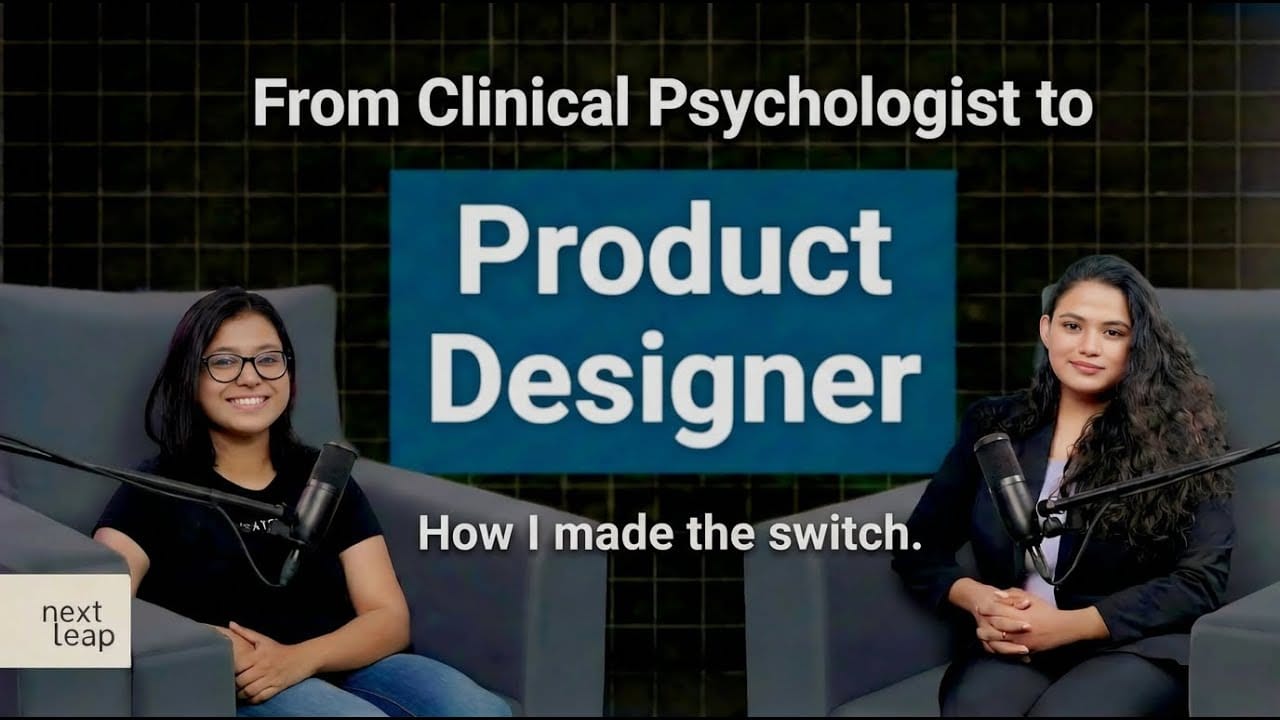
Tamanna went from clinical psychologist to product designer without a design degree. She spent three years in clinical psychology, found the work too emotionally overwhelming, and taught herself UI/UX from YouTube before joining a live bootcamp. She now works as a product designer at Pico Xpress. On the NextLeap Podcast she explained why she switched, how she landed her first role and what she would tell anyone starting out.
Why did a clinical psychologist to product designer switch happen?
Because the emotional load became too heavy. Tamanna finished her graduation in clinical psychology and did an internship, where she found it very overwhelming to grasp patients' emotions. She remembers crying almost every night. One day she decided the field was not for her, even though she had invested three years in it and learned a lot there.
She then decided to give UI/UX a try. She watched YouTube videos on how to become a UI/UX or product designer, and a friend recommended NextLeap.
Why did she join a live bootcamp instead of more recorded courses?
To get her doubts answered. Before NextLeap, Tamana had bought several courses on Udemy and Coursera, but recorded lessons gave her no chance to clarify anything. She names three reasons for choosing NextLeap: a reasonable fee, instructors and mentors from the industry, and placement support.
She was also self-taught and not from a design school. The bootcamp, she says, gave her the boost and confidence to chase the goal.
What did she learn in the bootcamp?
How to tell a case study as a story, and how to use Figma properly. Tamanna says she did not know how to write a case study before joining. A case study means solving a problem and unfolding it step by step, in sequence. She also learned to connect theory with a real-life problem.
Figma was a second gain. She points to auto layout as something beginners skip:
Auto layout is a lifesaver.
Auto layout works like flexbox in front-end code, she explains, so designs adjust to different phone sizes instead of breaking. She had not used it before the bootcamp. An instructor gave her a lot of time and answered her questions about why something happened one way and not another.
How did she land her first product design role?
With a portfolio built from a real project, plus freelancing. After the bootcamp she began freelancing while she built her portfolio. Freelancing showed her how to solve a real problem rather than a hypothetical one.
The graduation project was a personal finance app for tracking spending. Tamanna designed 15 to 20 user flows for it, and the interviewer who saw her portfolio was impressed by the volume. She says it gave her an edge and boosted her confidence to speak properly in interviews. Alongside that project she had three more case studies, so three to four in total.
What was hardest about switching from psychology to design?
Tamanna says the list is endless, because she picked everything up step by step. Product design has two sides, the user journey and the UI, where you also have to build a visual, appealing look.
She warns about one thing in particular. Before joining, she watched many videos promising you could become a UI/UX designer and land a job within three months. She now finds them unrealistic. Her advice is to skip those videos, learn slowly, trust your process and, if you can, learn live from industry designers who can advise you and share their mistakes.
Does psychology help in UI/UX design?
Yes, a little. Tamanna says UI/UX has some psychology attached: what pleases a user, what they are thinking, what they need. Users often do not say directly what they want, she notes, so you have to assume and ask many questions to find what they really need.
The bigger gap was technical. When she handed designs to developers she realised she had to understand the front end a little, so she learned some CSS.
Which AI tools does she use for design?
Mainly as a brainstorming partner. Tamanna says she has explored many AI tools, but she has not had a good experience with AI UI generators such as Bolt, v0 or Google Stitch. Chatting and re-prompting again and again can be overwhelming.
When she has a PRD or a problem, she checks how an AI tool approaches it from another perspective. For visual ideas she takes inspiration from Mobbin, Dribbble and Pinterest, which help her see how data can be shown through cards or other UI elements.
What is her advice for aspiring product designers?
Observe, and solve a real problem. Tamanna says:
Be a keen observer, because you have to observe a lot and create user-centric design.
Her example is Uber. Think about what problem it solved, imagine that nobody had solved it, work out how you would have done it better, and then study which features they launched to create a good journey for the end user.
She also says there is no single personal style. It depends on the client and the project: a flashy UI for end users, and good functionality for B2B, where the data is huge.
What are her quick preferences as a designer?
Tamanna answered a rapid-fire round at the end. She uses both Figma and pen and paper, leans towards Dribbble over Behance, and does not drink coffee while designing. She puts creativity before deadlines, and her favourite UI trend right now is liquid glass, after Apple's latest update. If she were not a designer or a psychologist, she says she would probably be an auditor.
Watch the full conversation
Tamanna shared her story on the NextLeap Podcast.
Start your own switch
Tamanna's route came from self-study, a live bootcamp with industry instructors and a portfolio built on real problems. If you want to become a product designer, the NextLeap UI/UX Design Fellowship offers live mentorship, portfolio projects and placement support.
Frequently asked questions
Can a clinical psychologist become a product designer?
Tamanna did. After three years in clinical psychology she taught herself UI/UX from YouTube, joined a live bootcamp and built a portfolio of three to four case studies. She now works as a product designer. She says psychology helps with understanding user needs, but you also need Figma and some front-end knowledge.
Can you become a UI/UX designer without a design degree?
Tamanna is a self-taught designer who did not come from a design school. She says recorded courses left her doubts unanswered, so she joined a live bootcamp with industry instructors. She cautions against videos that promise a job in three months and advises learning slowly and trusting your process.
What should a beginner UX portfolio include?
Tamanna says to write case studies as a story: define the problem and unfold the solution step by step. Her portfolio had three to four case studies, including a personal finance app with 15 to 20 user flows. She also says real freelance work teaches you more than hypothetical problems.
Does psychology help in UI/UX design?
Tamanna says a little. UI/UX involves understanding what pleases users and what they need, and users rarely say it directly, so you have to ask many questions. She adds that the technical side still needs learning, such as Figma auto layout and basic CSS for talking to developers.


