
 My Courses
 My Portfolio
 Refer & Earn
 My Purchases
At a glance
- Before: B.Tech student, then UI/UX head of a college design club
- Now: Product Designer at Virgio
- Program: NextLeap UI/UX Design Fellowship
- What made the difference: Design club experience, milestone and graduation projects done with a cohort
- Biggest lesson: "You need to be the advocate for the user."
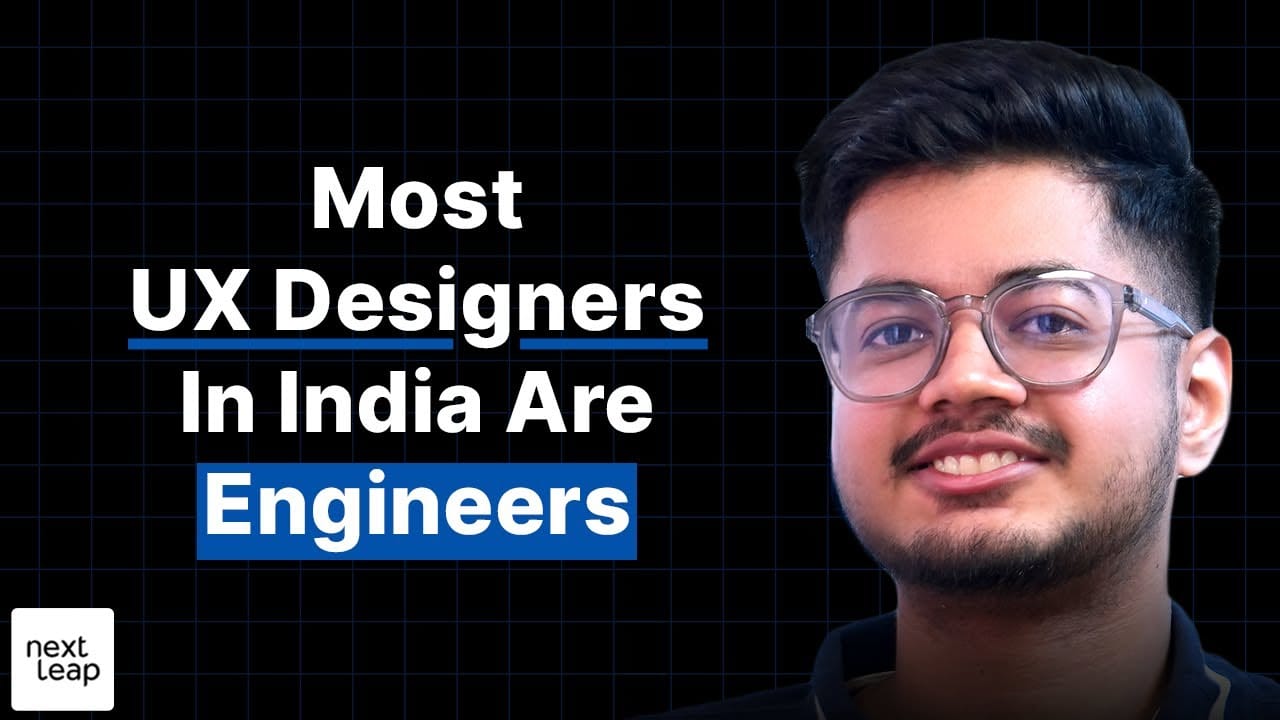
Sameer's B.Tech to product designer switch began with rejection. He tried to join technical clubs and was rejected, then found design through a design hackathon. He now works as a product designer at Virgio. On the NextLeap Podcast he explained how a hackathon disaster, a club leadership role and a fellowship shaped his path, and what he learned about designing for real users.
How did Sameer go from B.Tech to product designer?
By finding design after software did not work out. Sameer studied B.Tech and started developing skills as a software engineer, but says he came to know it was not for him. He tried to join clubs and chapters to get into technical teams and was rejected by all of them.
He then came to know about design through a design hackathon. He liked it, though he was not sure at first. He later joined a club as a committee member in the design team and made many posters for festivals. He knew nothing about product design then.
How did he grow inside the design club?
From committee member to board member to UI/UX head. After a year on the team, Sameer became a board member and then joined as the UI/UX head, managing the designers under him on many projects. That, he says, is where his journey began, although it gave him only a glimpse of UX design. He tried to learn, and he tried to teach his juniors.
What was his first design project like?
A disaster, in his words. It was at a design hackathon, where he went just to learn what design is about, and he says he made a very big mess of it. He does not want to talk about it much, but it was the first one, and it was fine.
Why did he choose product design after B.Tech?
Because he wanted to commit to it at the end of his degree. Sameer thought he would pursue a master's in design, so he appeared for the 2024 design entrance exam and got a rank of about 1200. That was not good enough to get into the IITs, so he thought he would go for a job instead. He came to NextLeap and got the job through it.
What did NextLeap teach him that college did not?
How to serve users. Sameer says that during his B.Tech he never thought about users much; everyone wanted to make personal projects. At NextLeap he learned how to cater to user needs, and how to clear the ambiguity that stakeholders bring by coming up with cleaner solutions that work for everyone.
Two classes stood out. One was about understanding the user better, and he watched it three to four times, back to back. Another focused on the business side of product design. He says he would never have had exposure to that kind of knowledge without the course.
What was the cohort like?
Collaborative. Sameer says there was a community built around the course. Students made the milestone projects together and worked together on the graduation project, and helped each other. He stresses it is not cheating, just teamwork.
What is he proud of at Virgio?
A widget on his first day. His manager asked him to come up with a unique widget showing the breakdown of the price of each item, which e-commerce sites usually do not show: how much went into logistics, how much into storage and so on. Sameer came up with a unique widget on day one, and his manager was impressed. A company usually takes a lot of time to develop something, he says, but after a month the team built it, and it went viral.
He also enjoyed a hackathon at Virgio, and he recently designed a concept for a perfume launch. It uses sound to define the scent of each perfume, and he designed a widget where sounds are made for each perfume.
How is designing at work different from designing in college?
The stakes are higher. In college, Sameer says, the projects were low stakes: he made things for personal fun for other students. At work there is a much larger user base, and there are stakeholders who take care of the business while he takes care of the users. He now has to be attentive and serious about the work.
He used to think design was what you see on the screen. It is much more than that, he says: it is about getting to know the user better and introducing the user to the business.
You need to be the advocate for the user.
He explains that this means standing up for the user in front of the company.
What advice does he give for getting a design job?
Find a good mentor, and work hard. Sameer says the field is a little hard to get into, and you need really good mentorship to get things right, such as your resume. Getting hired is about compatibility between the company and you, so define yourself and put that in your portfolio.
He adds that the market is not great, so you need to work hard. It is not impossible but a little hard. A little beyond your limits, he says, would be enough to get the job done.
What are his quick design preferences?
In a rapid-fire round, Sameer said he would redesign door handles, after he pulled a door that was meant to be pushed. He likes the Ghibli style and retro modern looks that play with fonts and textures. His comfort food is his mother's parathas with dal, and the unusual object on his desk is a gaming controller.
Watch the full conversation
Sameer shared his story on the NextLeap Podcast.
Start your own switch
Sameer's route came from design club experience, a structured fellowship and a cohort that built projects together. If you want to become a product designer, the NextLeap UI/UX Design Fellowship offers mentors, portfolio projects and placement support.
Frequently asked questions
Can an engineering graduate become a product designer?
Sameer did. He studied B.Tech, found software engineering was not for him and moved into design through a hackathon and a college design club. He then joined a NextLeap fellowship and now works as a product designer at Virgio. He says mentorship helps with things like your resume.
How do you get started in design if technical clubs reject you?
Sameer was rejected by every technical club he tried. He discovered design through a design hackathon, joined a design club as a committee member, made posters for festivals and grew into a board member and UI/UX head over a year. He says the first step was simply trying it.
What does a product designer do differently from a college designer?
Sameer says college projects were low stakes and made for fun. At work there is a larger user base and there are stakeholders who look after the business, so the designer must serve user needs. He describes the job as being the advocate for the user in front of the company.
What advice does Sameer give for getting a product design job?
Sameer says the field is a little hard to get into, so find a good mentor for things like your resume. Hiring depends on compatibility between company and candidate, so define yourself in your portfolio. He also says to work hard and go a little beyond your limits.


