
 My Courses
 My Portfolio
 Refer & Earn
 My Purchases
At a glance
- Before: Assistant professor in computer science
- Now: Product designer at Irona AI
- Program: NextLeap UI/UX Design fellowship with weekend classes and a graduation project
- What made the difference: A structured course, her research habit and creativity
- Biggest lesson: "Believe you can. You're halfway there."
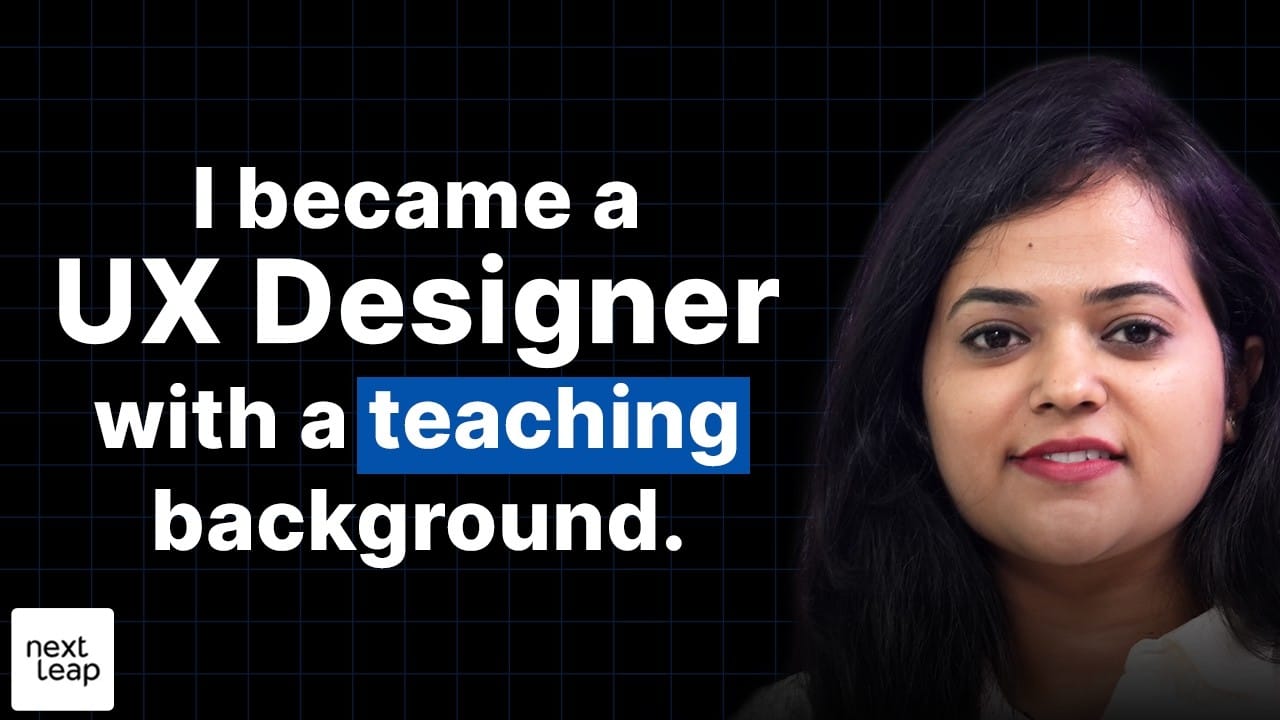
Pooja moved from assistant professor to product designer after teaching computer science and realising she wanted to do something new. She loved teaching, but every semester repeated the same cycle, and she wanted to upskill. A friend and her brother pointed her towards product design and a three-month fellowship. On the NextLeap Podcast she explained the switch, the hardest part and how AI fits in.
How did an assistant professor to product designer switch happen?
Through a wish to keep learning. Pooja says she loves teaching even now, but she is someone who wants to keep upskilling and do something according to the trend and the technology of the day. As an assistant professor she prepared for one semester, taught the same thing, and adjusted how she taught when new students came. Apart from writing and publishing papers, everything was the same.
Many friends and well-wishers told her she was not fit to be a teacher yet and could do it after her 40s or 50s. They suggested she try the IT industry because it was booming, with AI coming. That was a push, and the idea was already in her mind.
Why product design?
Because it is well established and rewards creativity. Pooja says COVID did not help her come back to work, since everything was shut and she did not think of changing right away. Then a friend suggested product designing, and her brother told her about the NextLeap course.
She liked that it was only three months, so she would not waste half a year or a year. She also draws, sketches and paints, and people told her she has creativity, which product design needs. On research, she saw the match: product design starts with research, and she would not lose her research habit.
What was the hardest part of the change?
Focus. Pooja used to talk for six to seven hours a day as a teacher and now does not talk that much. She also used to focus on one subject. In product design she has to look at three to four aspects at once, which she calls the most challenging thing she faced and has now overcome: focusing on one thing at a time while also multitasking.
She adds that teaching is a stable profession, but it does not give you much room to experiment in your career or your resume. You go with the proper curriculum and the academic way, and you can bring extra things only inside the classroom.
Is product design as unpredictable as people say?
Less than it looks. The host put it to her that teaching has a structure, while product design brings surprises, such as a client who dislikes a design or an app for elderly people. Pooja says teaching is structured because you have limited time to finish the academics. She found product design structured too.
When you start designing a product, she says, there is a flow: you research, do user research and primary research, find a problem, bring a solution, design it and go to the client. Compared with teaching, she does not see much difference. In teaching you also research, frame a solution and teach, and students bring different questions the way clients do. She treats it as a structured process.
How did the NextLeap fellowship support her?
By keeping her moving. Pooja tells friends who want to switch to consider NextLeap because it lasts three months, not a year or half a year. Some courses take a year and still do not lead to a job. Here, she says, you are on your toes: they keep you so busy that you do not think of anything else.
She quit her job before starting the course and did not think she was free at home. There were weekend classes on Saturday and Sunday, tasks to complete and a graduation project, with no break in between. Instructors taught their part each week and left tasks for the next, so she went from professor to student. She calls that a major transition and says it helped her become a good student.
Which teaching skill helped most?
Research. Pooja says that as a professor she had to find out what topic to research, and professors do not research a topic that is already researched. So she looked for the next version of a concept, and research became search.
In product design there are two kinds, primary and secondary: talking to users and reading what has been published about a product. She had already done this many times as a professor, and she says she got a full score of 100 out of 100 for research on the scorecard of the NextLeap portal. When the instructors taught research as the first basic step, she agreed: if you do not know what users lack, how can you design something new?
Will AI replace product designers?
Pooja does not think so. Every tool gets an upgrade with AI, she says, and people ask whether product design jobs will go. AI can produce a design if you give it a prompt, but it cannot think like a human or take decisions.
She sees AI helping designers sketch, create a layout or a blueprint. But it cannot decide where to place things. She gives an example: it may put a button on the left side when she wants it on the right, since she uses her right thumb a lot. She does not fully depend on it, and says user research cannot be handed to AI. Brainstorming and creativity come from a human mind, she says, and AI cannot bring that human touch. Even with a good prompt, you have to put in your own emotions.
What does she say to people in a so-called stable job?
That stability depends on whether you are happy. Pooja says a job is not stable if you are earning but unhappy, and she was not happy with her own growth, so she searched for what she could be. Product design, she says, keeps you busy through the week, lets you interact with users and is creative. You design things that come into life, and you can say proudly that you designed them, the way you say a dish was cooked by you.
She suggests it for people who are stuck in jobs and do not like coding. Design is creative and lets you interact with people.
What quote does she live by?
A short one, which she says she has put into her own journey:
Believe you can. You're halfway there.
If you do not believe in yourself, she says, you have not even started. The next half is the effort you put in.
Watch the full conversation
Pooja shared her story on the NextLeap Podcast.
Start your own switch
Pooja's route came from a short structured course, her research habit and a belief that she could make the change. If you want to become a product designer, the NextLeap UI/UX Design Fellowship offers mentors, portfolio projects and placement support.
Frequently asked questions
Can an assistant professor become a product designer?
Pooja did. She taught computer science as an assistant professor, felt she needed to upskill and joined a three-month NextLeap fellowship. She says the change was hardest in focus, since she went from one subject to three or four aspects at once, but her structure and research habits carried over.
Do teaching and research skills help in product design?
Yes, according to Pooja. As a professor she had to find topics that were not already researched, and she used primary and secondary research. Product design starts with the same step, understanding what users lack. She says she scored full marks for research on the NextLeap portal.
Will AI replace product designers?
Pooja does not think so. She says AI can help with sketches, layouts and blueprints, but it cannot think like a human, take decisions or bring the human touch. She still does user research herself and puts her own emotions into prompts, and she does not fully depend on AI.
Is a product design fellowship enough to switch careers?
Pooja found the three-month NextLeap fellowship enough to make the move. Weekend classes, weekly tasks and a graduation project kept her busy with no breaks. She contrasts it with year-long courses that may not lead to a job, and advises friends who want a career change to consider it.


